
- >
- Blog >
- What to Do After a Car Accident in Cyprus (2026 Guide)
What to Do After a Car Accident in Cyprus (2026 Guide)

112
EU emergency number
police, ambulance, fire
48 hours
Police record window
for untraced-vehicle Fund claims
€500
Damage threshold
untraced-vehicle material damage
3 years
Time to claim
personal-injury limitation period
The first things to do after a car accident in Cyprus are simple: stop somewhere safe, switch on your hazard lights, and call 112 if anyone is hurt. What you do in the minutes after that matters just as much. Photographing the scene, swapping driver details, and telling your insurer can be the difference between a claim that's paid and one that's refused.
At DigiCare Insurance, an independent insurance agency based in Cyprus, we walk drivers through this every week. The steps below cover what to do at the roadside, who to call, when you actually need a police report, and how the claim works. We also explain what happens when the other driver has no insurance or simply drives off, because the Motor Insurers' Fund of Cyprus exists for exactly that. Whether you live here, you've just moved over, or you're visiting for a couple of weeks, this guide is for you.
What to Do Immediately After a Car Accident in Cyprus (The 6 Steps)
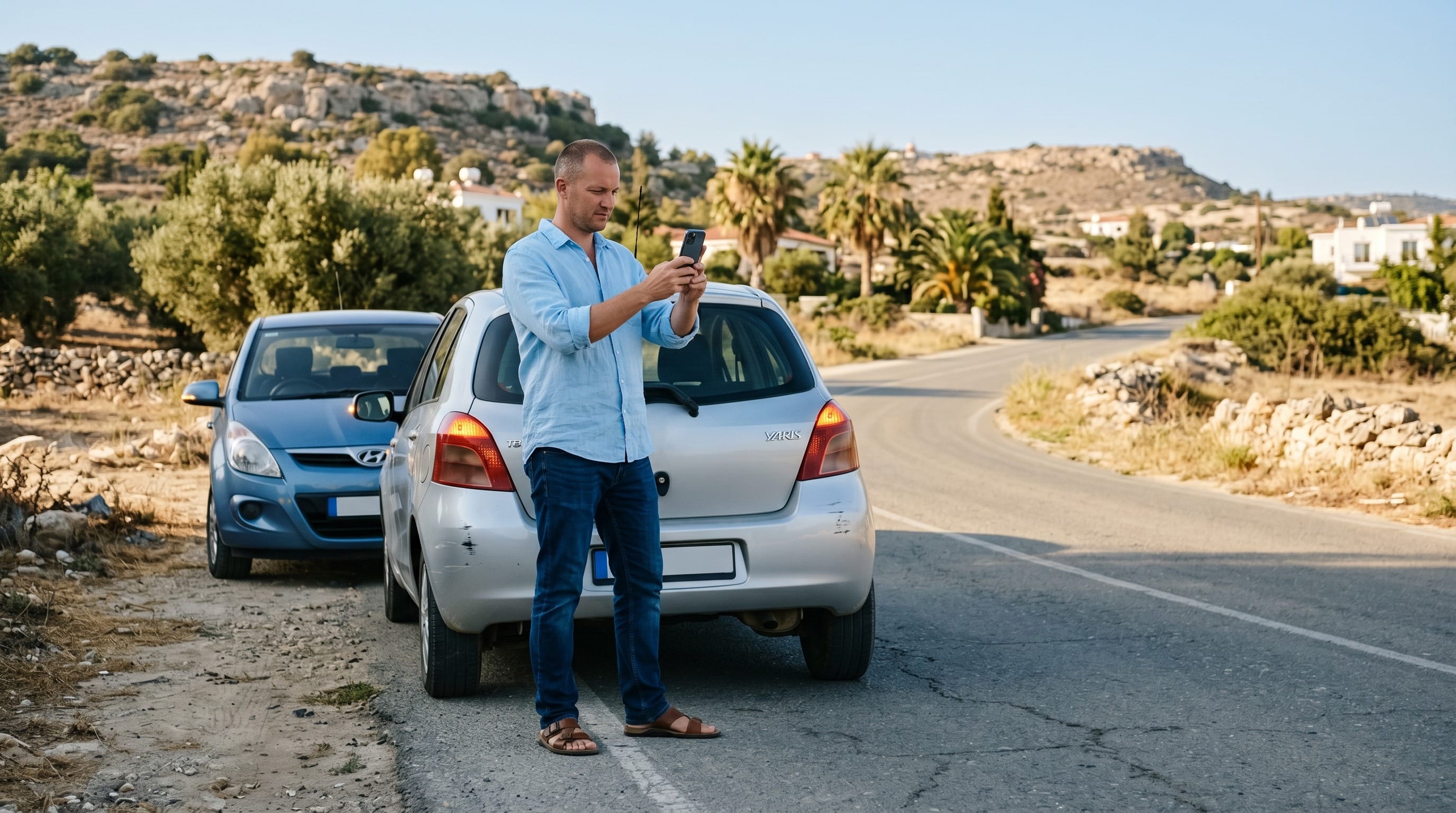
Stop and make the scene safe.
Pull over if you can, switch on your hazard lights, and check everyone for injuries before you do anything else.
Call 112 (or 199) if anyone is hurt.
These numbers reach the police, ambulance, and fire services in Cyprus.
Photograph everything.
Take clear pictures of the damage, the position of both cars, the road, any skid marks, and the wider scene.
Exchange details.
Swap names, driving licence numbers, and insurer details with the other driver. If you both agree on what happened, fill in and sign a European Accident Statement right there at the scene.
Record witnesses.
Note the names and phone numbers of anyone who saw the crash.
Notify your insurer promptly.
Report it as soon as you can, even if the damage looks like nothing. Many Cyprus insurers run a 24-hour Accident Care service (Frodida Atychimatos) that sends a representative to the scene to help document the accident.
Police attendance is legally required only for serious-injury accidents. For minor knocks the police may not turn out at all, but getting any accident on record still protects a future claim.
Who to Call: 112, the Police, and Roadside Assistance
| Number | Who answers | When to call |
|---|---|---|
| 112 | Police, ambulance, fire (EU-wide) | Any emergency, injuries, or serious crash. Works across the EU. |
| 199 | Cyprus emergency services | Any emergency or injuries within Cyprus. |
| Your insurer's 24-hour line / Accident Care | Your insurance company | To report the accident and, where your policy includes Accident Care, have a representative come to the scene. |
| Roadside assistance | Recovery and towing service | When your car can't be driven and needs towing. |
If your car can't be driven, road assistance in Cyprus can recover it and arrange towing. Keep the number saved in your phone. Emergency services in Cyprus and your recovery provider are separate contacts, so one won't get you the other.
Do You Need a Police Report? The 48-Hour Rule Explained
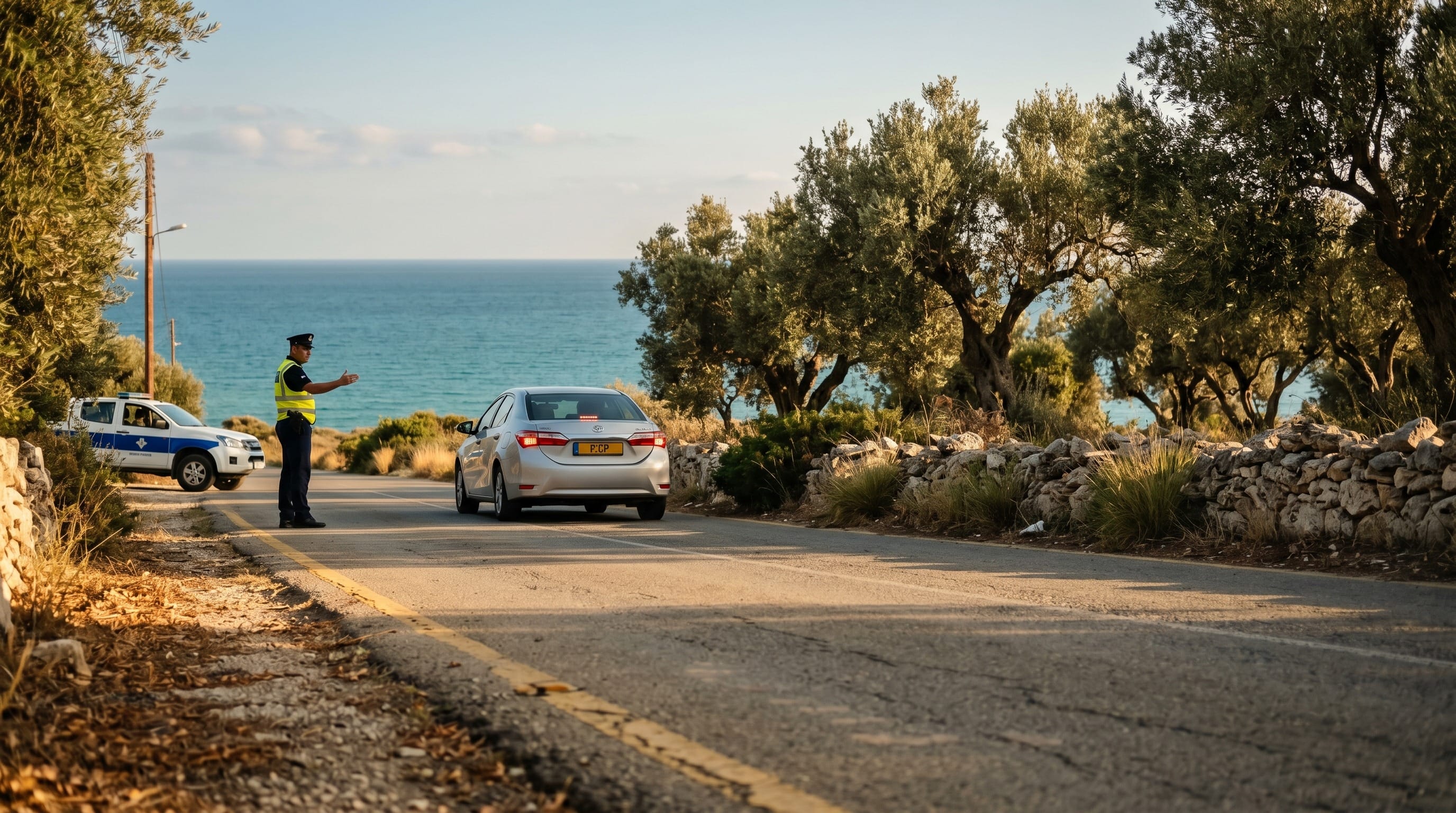
Police attendance is mandatory only when an accident causes serious injury, under Cyprus road rules. For anything else, calling the police is advisable rather than required. A police record helps establish who was at fault, and insurers often ask for one.
There's a common mix-up here. Plenty of drivers believe you must "report any accident within 24 hours." That isn't a universal rule. The 48-hour window is a specific requirement of the Motor Insurers' Fund of Cyprus: when an unidentified or untraced vehicle causes your accident, the police must record it within 48 hours for the Fund to consider your claim. It does not apply to every accident.
So why bother with a police report at all? Because it creates an independent record of the facts. It establishes liability, backs up your version of events, and is often needed before an insurer will settle. When in doubt, get the accident recorded.
Which Insurance Covers Your Car's Damage
| Comprehensive | Third-party fire and theft (TPFT) | |
|---|---|---|
| Damage to your own car | Covered, even if you caused the crash (you pay the excess) | Not covered |
| Theft and fire | Covered | Covered |
| Damage to other people and their property | Covered | Covered |
| How you recover for your car after a fault accident | Claim on your own policy | Recover only from the at-fault driver |
The "excess" is the first part of any claim you pay yourself before the insurer covers the rest. Every driver in Cyprus must hold at least third-party cover under the Motor Vehicles (Third-Party Insurance) Law, Law 96(I)/2000, which makes third-party insurance compulsory.
How to Make a Car Insurance Claim After an Accident in Cyprus
To make a car insurance claim in Cyprus, notify your insurer as soon as possible, then submit your evidence and let the insurer assess the damage before any repairs begin. Most property-damage claims are settled by the insurer directly; injury claims are more involved and may need a lawyer.
Notify your insurer as soon as possible
after the accident.
Submit the police report
if one was made.
Provide your photos and other evidence,
plus the completed European Accident Statement. The European Accident Statement is the standard bilateral accident form used across Europe, and both drivers ideally sign it at the scene where they agree on what happened.
Let the insurer arrange an inspection or assessment.
In uninsured-driver cases, the Motor Insurers' Fund of Cyprus must inspect your car before you carry out any repairs.
Repair or settlement.
Once liability and cost are agreed, the insurer pays for repairs or settles the claim.
A property-damage claim covers the cost of fixing your car, and it's usually handled fairly quickly. A personal-injury claim is a different animal: it covers harm to people, may need medical evidence and a lawyer, and runs on the three-year time limit explained below. If you want to compare cover before your next renewal, see our guide to the best car insurance companies in Cyprus.
What If the Other Driver Is Uninsured, Untraced, or Foreign?
Uninsured vehicle.
Notify the police about the accident. Let the Fund inspect your car before you carry out any repairs. Then submit the claim form together with your vehicle registration certificate and your insurance certificate.
Untraced or hit-and-run vehicle.
Get the police to record the accident within 48 hours. The Fund then investigates the circumstances. You may be compensated for injury or death, and, under certain conditions, for material damage over 500 euros.
Foreign-registered vehicle.
Note the registration number and the country it's from. Ask the driver for their Green Card (the international motor insurance document). Then contact the Cyprus International Insurance Bureau (Green Card Bureau), which handles claims involving foreign vehicles.
In all three cases, the same rule applies: don't start repairs until the Fund or its assessor has inspected your vehicle. An early repair can sink an otherwise good claim. For more on the rules around uninsured drivers, see our guide to driving without insurance in Cyprus.
How Long Do You Have to Claim? The 3-Year Time Limit
There are exceptions. For minors and for people under a mental incapacity, the time limit may be extended or suspended until they're able to act. Even so, it's far better to file early, while the evidence is intact and witnesses still remember what happened.
Keep these three deadlines separate in your mind. The three-year limit is the deadline for going to court over compensation. It isn't the same as the prompt notification your insurer expects, and it isn't the 48-hour police-recording window for untraced-vehicle claims through the Fund.
What an Accident Costs You: Excess, No-Claims Bonus, and Mistakes to Avoid
A few terms worth knowing:
- Excess: the first part of a claim you pay yourself before the insurer pays the rest.
- No-claims bonus (NCB): a discount you build up for each year you don't claim. An at-fault claim usually cuts it.
- Total loss (write-off): when repairs would cost more than the car is worth, the insurer pays you the car's market value instead of repairing it.
Mistakes drivers make after a crash in Cyprus:
- Leaving the scene without a police record.
- Signing any disclaimer or waiver at the scene.
- Accepting a fast cash settlement before injuries are properly assessed.
- Putting off medical attention after a knock.
- Claiming for minor damage when the excess costs more than the repair.
- Not photographing the damage before repairs begin.
How DigiCare Helps After an Accident
As an independent insurance agency, we guide our clients through every step of a claim after an accident. We deal with the insurers on your behalf, explain what each form actually means, and help you steer clear of the mistakes that get claims refused. Where your policy includes them, we can arrange road assistance and a courtesy car so you're not left stranded without transport.
We support clients in English, Russian, and Greek, so nothing gets lost in translation at what's already a stressful time. If you'd rather be properly protected before anything goes wrong, get a car insurance quote or explore car insurance in Cyprus with us, and keep our road assistance in Cyprus details handy for the day you need them.
Frequently Asked Questions
Involved in an accident? Get properly covered before it happens again.
Get a Free Car Insurance QuoteGet the right car insurance cover before the next accident.
Get a Free QuoteRelated Articles

Car Insurance in Cyprus in 2026: Types, Costs, Rules, and How to Save
24 March 2026
What Happens If You Drive Without Insurance in Cyprus? Penalties, MIF, and Real Numbers (2026)
15 May 2026

How Car Insurance Is Priced in Cyprus: The Rating Factors Explained
4 June 2026