
ENVIRONMENTAL & POLLUTION LIABILITY · CYPRUS
Environmental Liability Insurance in Cyprus
DigiCare Insurance is a licensed Cyprus insurance agency, ICCS licence 2451. We place environmental and pollution liability cover for Cyprus operators: fuel storage and filling stations, waste companies, manufacturers, quarries, marinas and contractors.
Law 189(I)/2007 does not require you to buy this cover. Section 15 asks the Minister to encourage a financial-security market. It does require you to prevent and remedy environmental damage, and it lets the Department of Environment recover the cost from you.
10+
Insurers compared
15+
Years in Cyprus
2451
ICCS licence
The Cyprus insurers we place






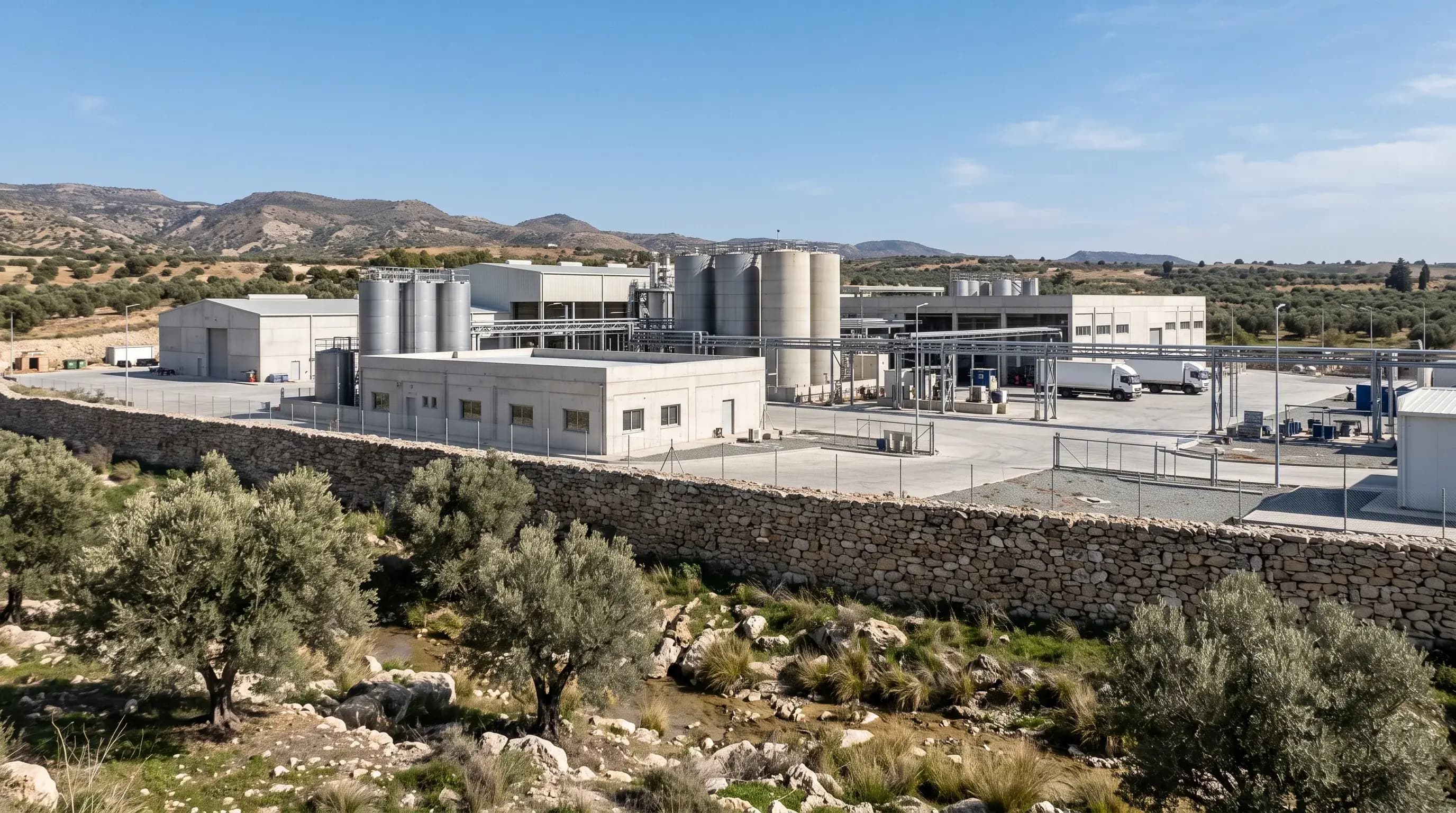
Environmental liability insurance is not compulsory in Cyprus. The duty to prevent and remedy environmental damage is, and the Department of Environment can order clean-up and recover its costs from the operator. DigiCare Insurance arranges the cover: on-site and off-site clean-up, statutory remediation under Law 189(I)/2007, third-party pollution claims and defence costs. Quoted per site and activity.
Get an environmental liability quoteWhat it is
What is environmental liability insurance?
Environmental liability insurance pays to clean up pollution your operations cause, on your own site and on someone else's. It covers the remediation a Cyprus regulator orders under Law 189(I)/2007, the injury and property claims a neighbour brings, and the cost of defending both. DigiCare Insurance places it with the insurers who underwrite this class for Cyprus risks.
The market sells the same product under several names. Environmental Impairment Liability, or EIL, is the London underwriting label. Pollution Legal Liability, or PLL, is the US and London synonym. Contractors' Pollution Liability, CPL, is the project-based version written for building sites. Contaminated-land cover and site pollution cover are descriptive phrases for the same thing.
One structural point catches buyers out, so take it now rather than at renewal. This cover is written on a claims-made basis. It responds to claims made against you during the policy period, and a retroactive date sets how far back into your history it reaches.
I get asked most weeks whether a business this size really needs it. The honest answer starts with what you handle and how close you sit to water, not with your turnover.
Who buys it in Cyprus
Filling stations and fuel depots with underground or bunded storage
Waste collection, transport, treatment and landfill operators
Food and drink production, including dairies, wineries and olive mills
Chemicals, paints and industrial coatings
Quarries, cement plants and aggregate producers
Marinas, boatyards and shipyards handling fuel, paint and antifouling
Construction and civil-engineering contractors working near watercourses
Dry cleaners, printers and metal surface-treatment shops
Public liability vs environmental
Doesn't my public liability policy already cover pollution?
Probably not the part that costs the most. Public liability wordings in the Cyprus market typically exclude gradual pollution and give cover back only for a sudden, one-off incident. And even a sudden incident runs into a second problem, the one that does the real damage.
The carve-back wording is old and it is standard. It restores cover only for a sudden, identifiable, unintended and unexpected incident that takes place in its entirety at a specific time and place. That is the 1991 ABI standard exclusion, and versions of it are still in circulation. A slow leak does not meet it.
The second problem is the word damages. A liability policy insures sums you become legally liable to pay as damages to a third party. When an environment regulator carries out emergency works and invoices you, that is not damages. It is a statutory debt. An English court reached that conclusion in Bartoline v Royal & Sun Alliance [2006] EWHC 3598 (QB), where a fire washed chemicals and firefighting foam into two watercourses. The Environment Agency billed GBP 622,680 for emergency works, plus roughly GBP 148,000 of statutory work notices, and the public liability policy did not respond. The market's answer was the bolt-on now sold as a statutory clean-up costs extension.
How much does an English case matter here? Under the Courts of Justice Law 14/1960, English common law applies in Cyprus as it stood at independence, so a later English judgment is persuasive authority a Cyprus court may consider rather than law it must follow. Bartoline is a first-instance decision and we found no Cyprus judgment on the point. Read it as the reason the market invented a fix, not as a forecast about your own policy.
Three gaps a statutory clean-up extension still leaves
Gradual pollution. The extension changes who is claiming, not how the pollution happened. Law 189(I)/2007 draws no line between sudden and gradual at all, and s.3(c) keeps even diffuse pollution in scope where causation to one operator can be established.
Complementary and compensatory remediation. Annex II of the Law sets three tiers: primary, complementary and compensatory. The last two make good the interim and residual loss of natural resources, and s.4(2) says the Law gives private parties no right to compensation, so a policy insuring sums payable as damages has no claimant to attach to.
Clean-up of your own site. Third-party liability insures your liability to a third party, and your own yard is not one. Sections 8 and 11 put the prevention and remediation duty on the operator's own contaminated land and let the authority recover what it spends.
Same event, two different policies
A tanker overfills and diesel reaches a watercourse the same afternoon
A public liability policy, typically · Responds, under the sudden-and-accidental carve-back
An environmental liability policy · Responds
A tank corrodes and the leak is found two years later
A public liability policy, typically · Excluded as gradual pollution
An environmental liability policy · Responds, subject to the retroactive date
The Department of Environment invoices you for emergency works it carried out
A public liability policy, typically · May not respond: a statutory cost-recovery claim is not damages
An environmental liability policy · Responds
Complementary and compensatory remediation ordered under Annex II
A public liability policy, typically · No third-party claimant for the policy to attach to
An environmental liability policy · Responds
Cleaning contaminated soil on your own yard
A public liability policy, typically · Not a third-party liability
An environmental liability policy · Responds
The s.18 administrative fine itself
A public liability policy, typically · No
An environmental liability policy · No. Fines are a market-standard exclusion

One asset, two failure modes
Sudden and accidental
A delivery tanker overfills the underground tank at a filling station. Product surfaces on the forecourt and reaches the storm drain inside the hour. Everybody sees it and everybody can date it.
Gradual
The same tank's lining fails. Two years of slow loss hides inside normal stock variance, and hydrocarbons reach the borehole a neighbouring grower irrigates from. Same asset, same operator, opposite insurance outcomes.
If you already hold public liability insurance, put one question to your insurer before anything else: does the policy carry a statutory clean-up costs extension, and how far does it reach?
Find out what your wording actually covers. Get a quoteWhat it covers
What does environmental liability insurance cover?
The insuring clause is much the same wherever the policy is written. Five heads: clean-up costs, environmental damage costs, emergency expenses, pre-incident costs and third-party loss. What changes between insurers is the definition behind each one. On this product the wording matters more than the price does.
Core cover
- Clean-up of pollution on your own site
- Clean-up of pollution that has migrated off site
- Statutory remediation under Law 189(I)/2007: primary, complementary and compensatory
- Third-party bodily injury caused by pollution
- Third-party property damage caused by pollution
- Gradual pollution, the exposure a public liability policy usually excludes
- Sudden and accidental pollution
- Emergency response and preventive measures
- Damage to protected species and natural habitats
- Legal defence costs, civil and regulatory
Extensions, on request
- Business interruption following a pollution event
- Contractors' pollution liability for work on a client's site
- Transported-goods and loading or unloading pollution
- Historic contamination, heavily conditioned and usually needing a site assessment
Damage to protected species and natural habitats deserves a line of its own. If your activity is not on the Annex III list, that is the only environmental damage the Law makes you liable for at all, under s.3(b). For most Cyprus businesses that single head is the whole statutory exposure.
Ask where defence costs sit. On most wordings they erode the limit of indemnity and fall inside the excess, so a long argument with a regulator eats the money you bought for the clean-up.
Solar and battery-storage sites sit inside this cover for what they leak, not for what they are. Transformer oil and a battery fire's run-off are pollution; damage to the array itself is property, and that belongs on photovoltaic insurance.
Contractors' pollution liability is the project-based form of this cover, and a standard contractors all risk policy does not include it. If you dig, drill or handle fuel on someone else's land, ask for it by name.
Fire is the classic route into a pollution claim. A commercial fire insurance policy pays for the burnt building and excludes the contamination, and firefighting water carries whatever it washes off your site.
If a regulator stops work while remediation runs, the lost income is a business interruption question, and it can be added to the environmental policy as an extension.
Pollution during loading, unloading or carriage sits between this cover and goods in transit insurance. Tell us if you move fuel, chemicals or waste by road.
Ask us which extensions your activity needsThe law
Is environmental liability insurance compulsory in Cyprus?
Environmental liability insurance is not compulsory in Cyprus. Section 15 of Law 189(I)/2007 asks the Minister to encourage a financial-security market; it places no duty on operators to hold cover. There is no minimum limit, no proof-of-cover requirement and no penalty for going without.
What you do carry, mandate or not, is the exposure. The same Law makes you prevent environmental damage, remedy it when it happens, and pay for both. Section 15(2) also gives the Council of Ministers a standing power to make regulations on financial security. That power exists and has not been used.
What Law 189(I)/2007 actually makes compulsory
Hold environmental liability insurance or financial security
Compulsory? · No. Section 15 asks the Minister to encourage a market, and the Council of Ministers may make regulations under s.15(2) but has not
Who enforces · No operator duty
Take preventive action on an imminent threat, and bear the cost
Compulsory? · Yes. Section 8
Who enforces · Department of Environment
Carry out remediation, and bear the cost
Compulsory? · Yes. Section 11, and under s.11(3) the authority may recover its costs from you
Who enforces · Department of Environment
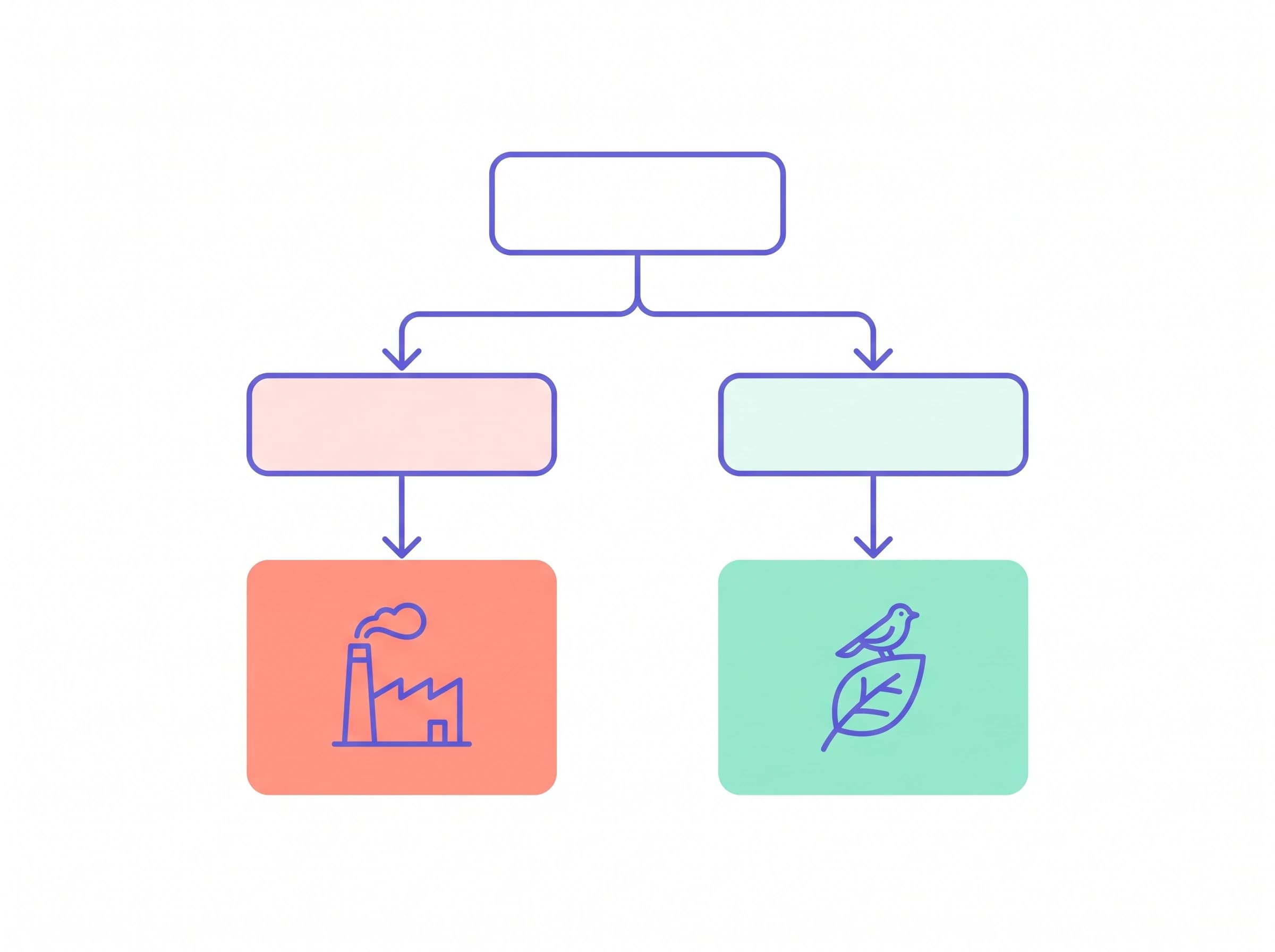
Strict liability, or fault? It depends what you do
An operator of an Annex III activity
What you are liable for · The full range of environmental damage: land, water, protected species and natural habitats
Does fault have to be proved? · No. Liability attaches regardless of fault, under s.3(a)
Every other occupational activity
What you are liable for · Only damage to protected species and natural habitats
Does fault have to be proved? · Yes. Intent or negligence must be shown, under s.3(b)
What puts an activity on the Annex III list
An activity that needs an integrated-pollution permit
A licensed waste operation: collection, transport, recovery, disposal, landfill or incineration
A permitted discharge to surface water or groundwater
Water abstraction or impoundment that needs prior authorisation
Manufacture, use, storage or release of dangerous substances
Transport of dangerous or polluting goods
Contained use or release of genetically modified organisms
Transboundary shipment of waste
Diffuse pollution is inside the Law, not outside it. Section 3(c) keeps it in scope wherever a causal link to one operator's activities can be established. Several secondary sources state the opposite.
Keep two exposures apart, because most copy on this subject merges them. Law 189(I)/2007 creates an administrative exposure: a remediation order, plus cost recovery by the authority. A neighbour who claims for injury or property damage is suing in tort instead. Section 4(2) says this Law gives private parties no right to compensation at all.
The statute names insurance itself. Sections 8(3) and 11(3) say the authority recovers its prevention and remediation costs from the operator through insurance cover of his property or other appropriate guarantees, as the Minister may determine. That is a power of the authority. It is not a duty on you to insure.
The next change comes from Brussels rather than Nicosia. Directive (EU) 2024/1203 raises the EU catalogue of environmental criminal offences from 9 to 20, Its transposition deadline for member states passed on 21 May 2026.
Find out which side of section 3 your activity falls onExclusions and penalties
What it will not pay, and what happens if you are uninsured
Start with the fact that surprises people most. The statutory penalty is the one thing an environmental policy will not pay. The remediation bill it does pay is the reason to hold the cover, because the fine and the clean-up order tend to arrive together and only one of them is insurable.
What a breach of Law 189(I)/2007 can cost you
≈ €8,543
for every day a breach continues. Section 18(1) sets it at CYP 5,000, redenominated at the fixed rate of €1 = CYP 0.585274.
≈ €341,720
maximum administrative fine. Section 18(1) writes CYP 200,000, and s.20 sets the same maximum on criminal conviction.
3 years
maximum imprisonment under s.20. Under s.21 a director, chairman, manager, secretary or other officer is guilty alongside the company.
Those figures need a word of explanation. The statute was written in Cyprus pounds and contains no euro amount anywhere in its text. Section 9 of the Euro Adoption Law 33(I)/2007 redenominates pre-2008 penalties at the fixed conversion rate and rounds the result down. Pages that quote the fine as a flat euro figure are reading Cyprus pounds as euro, and they understate the statute by about 41%.
On conviction the court can go further. Section 20 lets it order the operator to bear the cost of remediating the damage, on top of the fine.
No policy pays that fine. Fines and penalties are a market-standard exclusion, and the insurability of penal fines is doubtful as a matter of public policy. Defence costs are a different thing and are normally insurable, including the cost of defending a regulator's action.
The exclusions a buyer actually hits
Known and pre-existing contamination
Anything you knew about, or reasonably should have known about, before inception. Historic contamination is an extension, not a default.
Known underground storage tanks
Decisive for filling stations and fuel depots. Disclose every tank, and ask for the known ones to be endorsed back in.
Asbestos, mould and legionella
Usually excluded outright, or cut back to a small sub-limit.
Fines and penalties
Excluded as standard. Defence costs are separate and are normally insurable.
Deliberate non-compliance
Knowingly operating outside a permit or an order is not an insurable accident.
Employee bodily injury
A different statute and a different policy, whatever caused the injury.
The Law carves out its own exceptions, and a policy tends to follow them. Section 4 puts armed conflict, hostilities, civil war and insurrection outside the Law, along with a natural phenomenon of exceptional, inevitable and irresistible character, nuclear risks, and activities whose main purpose is national defence.
Vessel and bunker pollution is a different market. It is placed through P&I alongside ship management insurance, and the Shipping Deputy Ministry's Civil Liability Certificate charges are certificate fees, not premiums.
Employee injury is not environmental cover either. Cyprus compels employers' liability insurance under Law 174(I)/1989, and that is where an injured worker's claim belongs.
Your commercial fleet policy has the same boundary. It covers a sudden accidental discharge during the period and excludes the rest.
Send us your tank and permit list. Get a quotePricing
What does environmental liability insurance cost in Cyprus?
No insurer that surfaces on the Cyprus results for this cover publishes a premium, and we are not going to invent one. The product rates on activity class, site count, materials handled, proximity to water, limit, retroactive date and claims record. There is no standard unit for a from-price to hang on, which is why every quote starts with a proposal form.
The supply side says the same thing in its own way. A full market policy wording for this class runs to roughly 25 pages and prints no limit, no excess and no premium. Each one of those reads as detailed in the schedule.
Watch what currency the answer comes back in. The one priced organic result on this query is a United States contractor range in dollars, priced under CERCLA and EPA stormwater rules, a regime Cyprus does not have. The People Also Ask answers are in pounds and Australian dollars. None of it translates, so we do not print those numbers and we do not convert them.
This is not market secrecy. Cyprus insurers do publish premiums for other liability lines, including ones we quote elsewhere on this site. What is different here is the way environmental impairment gets underwritten.
What we are asked, and what it does to the price
| What we are asked | Why it moves the premium |
|---|---|
| Activity class, and whether it is an Annex III activityPrimary rating base | Sets the liability standard before anything else: strict liability, or fault plus biodiversity damage only |
| Number of sites, and what each one has done historically | Historic contamination is the hardest thing to insure, and the reason a site assessment gets requested |
| Materials handled, stored and moved, and in what volumes | Fuels, solvents, chemicals and process effluent price differently from dry goods |
| Proximity to a watercourse, borehole, aquifer or protected area | Cyprus groundwater sensitivity turns a small loss into a large remediation |
| Limit of indemnity and the excess you will carry | The two levers a buyer actually controls |
| Retroactive date, and whether you need cover for the past | Decides whether anything before inception is inside the policy at all |
| Claims history, and documented spill-response controls | A written response plan and bunded storage are the cheapest premium reductions available |
So what happens after you enquire? We put the risk to the insurers who write this class for Cyprus, and you get a written comparison of limit, excess, retroactive date and exclusions, quoted per site and activity rather than off a price list.
Get your rating factors priced. Ask for a quoteCheck before you buy
Seven things to check in the wording before you buy
Every item here is a question to put to the insurer, not an accusation. No Cyprus environmental wording is published anywhere we could find it, so nobody, us included, can tell you what a particular policy says. You can make them tell you.
Does the wording define environmental damage by reference to Law 189(I)/2007? Market wordings usually point at a national transposition of the Environmental Liability Directive. If yours names foreign regulations, or names nothing, ask whether the statutory-remediation cover attaches to a Cyprus regulator's demand at all.
What is the retroactive date, and what does it leave outside the policy?
Does it reach complementary and compensatory remediation under Annex II, or only primary remediation?
Does it pay to clean your own site, or only third-party land?
Are your underground tanks disclosed, and are the known ones endorsed back in?
Do defence costs erode the limit, and do they sit inside the excess?
What extended reporting period do you get if the policy lapses, and what does it cost?
Then one more, aimed at the policy you already hold. Does your public liability wording carry a statutory clean-up costs extension, and how far does it reach? That answer decides how much of this you still need to buy.
Send us the wording. We will check these sevenGet a quote
Get an environmental liability quote for your Cyprus site
We only need the basics to start: what the business does and where each site sits. This is a quoted-per-site product, so what comes back is a quotation with the wording checked, not a number off a rate card.
Tell us the activity and the sites
What the business does, how many sites you run, what each one handles and how close it sits to water.
We approach the market
We put the risk to the insurers who write this class for Cyprus risks, from the 10+ insurers we compare.
You get it in writing
A written comparison of limit, excess, retroactive date and exclusions, so you can see what you are buying.
Have this ready and the quote comes back faster: an activity description, your site list and addresses, the permits you hold, the materials and volumes you handle, how close you are to a watercourse or borehole, your claims history, and any known contamination or site assessment.
A written comparison usually comes back within two working days. And if a permit renewal or a contract signature is waiting on it, tell us the date and we will work to it.
Tell us about the site
Eleven fields, and the last one is optional. We come back with a comparison across the insurers who write environmental liability for Cyprus risks.
DigiCare Insurance is a licensed Cyprus insurance agency, ICCS licence 2451, with 15+ years in Cyprus since 2009 and 5.0 on Google. We compare 10+ insurers and work in English, Greek and Russian, from Paphos, Limassol and Nicosia.
This cover sits inside business insurance in Cyprus. Most operators hold it alongside public liability insurance and commercial property insurance.
Primary sources for the legal statements on this page
- Environmental Liability (Prevention and Remedying of Environmental Damage) Law 189(I)/2007, consolidated Greek text (cylaw.org)
- Department of Environment, Ministry of Agriculture, Rural Development and Environment: environmental liability legislation
- Euro Adoption Law 33(I)/2007, section 9, redenomination of fines and administrative penalties (cylaw.org)
- European Central Bank: Cyprus and the euro changeover, fixed rate EUR 1 = CYP 0.585274
- European Commission, DG ECFIN: Cyprus and the euro
- UNEP Finance Initiative, June 2022: Harnessing environmental pollution liability insurance for a sustainable economy
- Pinsent Masons Out-Law: Bartoline v Royal & Sun Alliance [2006] EWHC 3598 (QB)
- Eurojust: note on Directive (EU) 2024/1203 on the protection of the environment through criminal law
- eucrim: The Revised EU Environmental Crime Directive
Costas Matheou — Licensed insurance agent, DigiCare Insurance, Paphos, Cyprus
Last reviewed: 31 July 2026
Licensed Cyprus insurance agency · ICCS licence 2451
We review this page whenever Law 189(I)/2007 is amended, whenever the Council of Ministers uses the s.15(2) regulation power, and as Directive (EU) 2024/1203 is transposed across the EU.
FAQ
Environmental liability insurance in Cyprus: common questions
The clean-up bill arrives before the argument about who pays it does
A continuing breach can run to ≈ €8,543 a day in administrative fines under s.18(1), and the Department of Environment can carry out the works itself and invoice you afterwards. Send us the activity and the site list, and we will compare the cover across 10+ insurers.
Licensed Cyprus insurance agency, ICCS licence 2451 | 5.0 on Google