
Marine & Shipping Liability · Limassol · Larnaca · Nicosia
Ship Management Insurance in Cyprus
Ship managers' liability and errors-and-omissions cover for third-party management companies, for the vessels you operate but do not own. Placed by DigiCare Insurance, a licensed Cyprus insurance agency comparing 10+ insurers.
Cyprus law requires the person operating a ship of 300 GT or more to keep it insured for maritime claims. Law 14(I)/2012 defines that person to include the manager.

2451
ICCS licence
10+
Insurers compared
15+
Years in Cyprus
The Cyprus insurers we place







Cyprus law puts the duty to insure a ship for maritime claims on whoever operates it, and Law 14(I)/2012 defines that to include the manager. Your own errors-and-omissions cover, by contrast, no Cyprus law requires. DigiCare Insurance arranges both. Tell us your fleet and mandate for a quote.
Ask for a quoteWhat it covers
What does ship management insurance cover in Cyprus?
Ship management insurance is the package a third-party ship management company buys to cover its own liability for the services it provides: crew, technical and commercial management of vessels it does not own. The spine of it is Ship Managers' Liability, also sold as Errors & Omissions. It insures your work, not the owner's ship.
Four things it is not, because all four turn up in the same search results. It is not the owner's P&I or hull and machinery cover. It is not the cargo owner's goods-in-transit policy. It is not yacht or pleasure-craft cover. And it is not a directory of ship management companies, which is what most of the competition for this page turns out to be.
If your mandate is crew management only, this cover still applies to you, along with Marine Employers' Liability. You do not need to hold a technical or commercial mandate as well.
I get asked about this most often by managers who have just signed their first outside owner. Up to that point every policy in the file belonged to the group. The moment you manage tonnage you do not own, one of them has to be in your own name.
Cyprus holds one of the largest concentrations of third-party ship management anywhere, measured against the size of the country, and most of it sits in Limassol. The revenue side of that cluster has been studied in peer-reviewed work on Cyprus ship management, which is unusual for a market this specialised.
Who buys this in Cyprus
Third-party ship managers holding full management mandates out of Limassol
Crew managers and manning agents supplying seafarers under CREWMAN terms
Technical managers carrying the Document of Compliance as the Company under the ISM Code
Commercial managers chartering, invoicing freight and holding owners' funds
In-house management arms of Cyprus shipowning groups that also manage for outside owners
Port and shipping agents in Limassol and Larnaca handling foreign-flag calls
Superintendency and marine consultancy firms advising on other people's tonnage
Newbuilding and sale-and-purchase supervision teams
Everything on this page is about commercial tonnage under a management agreement. Private boats and pleasure craft are a different product, and we cover those on our yacht insurance page.
Tell us what you manage and we'll quote itWhose policy is whose
Ship Managers' E&O and the owner's P&I: which one is yours?
Ship Managers' Liability and Ship Managers' Errors & Omissions are two names for one cover: your own professional liability for the management services you perform. Protection and Indemnity is a different thing entirely. P&I is the registered owner's mutual entry. You arrange it, you administer it, you do not hold it.
Ship Managers' Liability, also called E&O
Who is insured · The management company, so you
What it answers · Your own negligent act, error or omission in performing the mandate, plus the cost of defending the allegation
Protection & Indemnity (P&I)
Who is insured · The registered owner, through a mutual club
What it answers · The ship's third-party liabilities: crew, pollution, wreck removal, cargo claims against the carrier
Hull & machinery
Who is insured · The registered owner
What it answers · Physical damage to the owner's own vessel

Managers are commonly named as co-assured on the owner's entry, and that is worth having. It is also where the confusion starts, because being named on someone else's policy is not the same as holding your own. The terms of that entry are the club's and the owner's, not yours.
Four mechanics to read on any quote
Claims-made basis. The policy responds to claims made against you and notified during the policy period, not to the year in which you made the mistake.
Limit of indemnity. You choose it. There is no vessel value to set it from, which is why two managers of similar size often carry very different limits.
Retroactive date. Work done before that date sits outside the policy, whatever the rest of the wording says.
Retention. The amount you carry yourself on each claim before the insurer's money starts.
Cover on the goods those ships carry belongs to the cargo owner, and that is marine cargo insurance. It is a first-party policy on the consignment, and it never sits in a manager's programme.
Ship Managers' E&O is the marine variant of professional indemnity insurance. Same idea, tested against a management agreement instead of a services contract.
Ask which policy your mandate actually needsThe finding nobody else publishes
Is ship management insurance compulsory in Cyprus?
No Cyprus statute requires a ship manager to insure its own professional liability. But Cyprus law does require the person operating a ship of 300 GT or more to keep that ship insured for maritime claims, and Law 14(I)/2012 defines that person to include the manager. Breach of that duty is a criminal offence.
The law is Ν. 14(I)/2012, the Merchant Shipping (Shipowners' Insurance for Maritime Claims) Law, which transposes Directive 2009/20/EC. Section 4(1) sets its reach: ships of 300 GT or more, Cypriot or of any flag, entering a Cyprus port or operating in Cyprus territorial waters. Merchant tonnage under third-party management is essentially always above that threshold.
Read only the short title and you would file this under the owner's problems. The operative duty in section 5(1) does not fall on the shipowner. It falls on «ο έχων την εκμετάλλευση πλοίου», the person having the operation of the ship. Section 2(1) then defines that person as the owner or, in the statute's own words, «οποιοδήποτε άλλο πρόσωπο, όπως το διαχειριστή ή το ναυλωτή γυμνού πλοίου»: any other person, such as the manager or the bareboat charterer, who has taken over responsibility for operating the ship from the owner and has agreed to take on the duties the Law imposes.
One word does all of that work. «διαχειριστή», the manager, appears exactly once in the whole statute, in that definition. The word appears once, in the definition, and that is enough, because the definition is what the duty attaches to.
The duty, in order
The Law reaches ships of 300 GT or more, Cypriot or of any flag, entering a Cyprus port or operating in Cyprus territorial waters. Section 4(1).
The duty to hold insurance falls on the person having the operation of the ship. Section 5(1).
That person is the owner, or any other person such as the manager or the bareboat charterer, who has taken over responsibility for operating the ship. Section 2(1).
The cover must meet the applicable LLMC 1996 limit for the ship's tonnage, per event, and a valid certificate must be kept on board. Sections 5(1) and 6.
For a Cyprus ship, a copy of the certificate is filed with the authority, and any change of insurer is notified. Section 5(2).
Acting in breach of sections 5 or 6 is a criminal offence. Section 7(1).
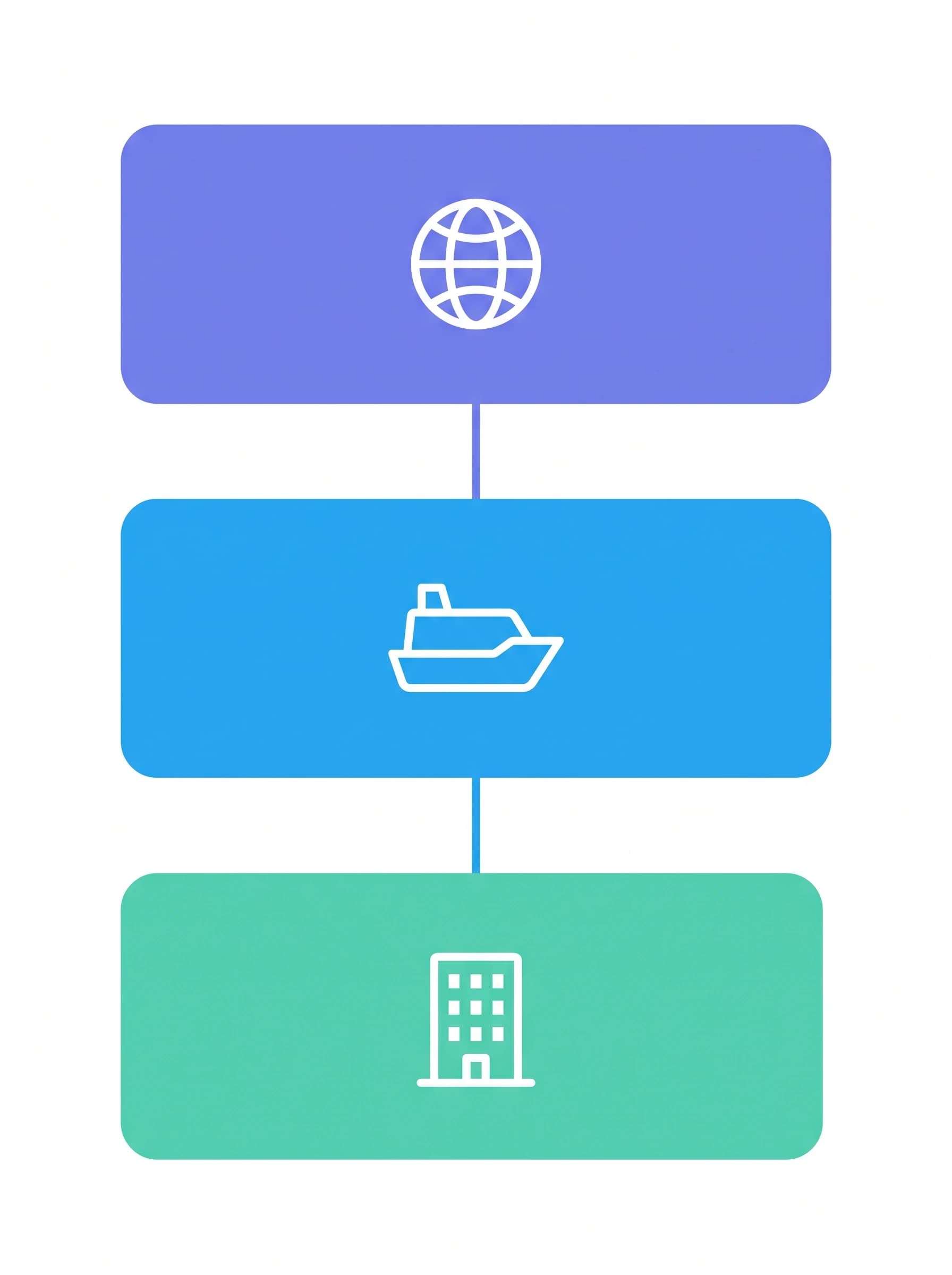
Now the boundary, because this is where most readings go wrong. "Insurance" in that Law expressly means P&I-club-type cover, proven self-insurance or a financial guarantee. So the cover that discharges this duty is the owner's P&I entry, the one you already arrange. The exposure it creates for you is that the duty, and the offence, are yours.
Three instruments say the same thing in almost the same words. Law 14(I)/2012 section 2(1), ISM Code paragraph 1.1.2 and MLC 2006 Article II(1)(j) each define the responsible party as the owner or another person, such as the manager or bareboat charterer, who has assumed responsibility for operating the ship. The MLC puts it most plainly:
shipowner means the owner of the ship or another organization or person, such as the manager, agent or bareboat charterer, who has assumed the responsibility for the operation of the ship from the owner and who, on assuming such responsibility, has agreed to take over the duties and responsibilities imposed on shipowners in accordance with this Convention, regardless of whether any other organization or persons fulfil certain of the duties or responsibilities on behalf of the shipowner.
Maritime Labour Convention, 2006, Article II(1)(j)
Read that closing clause twice. Sub-contract the work and the responsibility stays exactly where it was.
The teeth are in section 7(1): acting in breach is a criminal offence carrying up to two years' imprisonment, or a maximum fine on conviction of €10,000, or both. Article 12 adds a separate maximum administrative fine of €8,500, which the competent authority may impose independently of whether criminal liability arises. The two are cumulative and independent of each other, and neither of them is a premium.
Certificates are filed with the Shipping Deputy Ministry. The statute, unamended since 2012, still refers to the Director of the former Department of Merchant Shipping, so the wording you read and the ministry you deal with do not match.
One correction, offered as a service
A claim circulates online that Cyprus requires proof of professional indemnity insurance when a ship management company registers and again at annual renewal. The gov.cy circular usually cited for it, Shipping Deputy Ministry Circular 13/2026 of 7 April 2026, contains no insurance requirement of any kind. It is linked below so you can read it yourself.
Sources for this section
- Ν. 14(I)/2012, Merchant Shipping (Shipowners' Insurance for Maritime Claims) Law, consolidated text (CyLaw)
- Directive 2009/20/EC on the insurance of shipowners for maritime claims (EUR-Lex)
- Maritime Labour Convention, 2006, Article II(1)(j) (International Labour Organization)
- Shipping Deputy Ministry Circular 13/2026 of 7 April 2026, ISM Code revised guidelines (gov.cy)
If you are an agent, not a manager
Cyprus shipping agents: the certificate duty is yours too
A Cyprus shipping agent handling a foreign-flag call carries the certificate duty in its own name. Section 5(3) puts it on the master, the operator and the agent, each separately, rather than on one instead of the others. You can be in scope without managing a single vessel.
The consequence that matters commercially is not the fine. Section 5(5) bars a Cyprus ship from sailing anywhere in the world while its operator is non-compliant, and bars a ship of any flag in breach from entering or leaving a Cyprus port. A vessel that cannot sail costs more per day than any penalty in the Law.
Article 11 gives the right of appeal to the operator "or his representative in the Republic". That is the agent again. If you are the name on the paperwork, you are the name on the file.
The filing itself is not complicated, and we will not pretend to more detail than exists. The Director may set the procedural detail by notification in the Official Gazette, so treat any form or portal you are told about as something to confirm rather than assume.
The insurance consequence for an agent is E&O and directors' and officers' cover, not a maritime-claims policy. Same boundary as the section above: the ship's cover is the owner's, the exposure is yours.
Get an agent's E&O quoteMandate by mandate
What each management mandate exposes you to
Your exposure is not set by how many ships you manage. It is set by which mandates you signed. A crew mandate, a technical mandate and a commercial mandate each hand you a different set of duties, and each one lands on a different policy.
Crew management
What you take on · Recruitment, Seafarers Employment Agreements, payroll, repatriation, and the MLC duties you assume in your own name. Circular 13/2026 treats you as the Company for crew purposes
Cover that answers it · Marine Employers' Liability, plus E&O
Technical management
What you take on · You are the Company under the ISM Code. The Document of Compliance is issued to you after an audit of your Safety Management System, you appoint the Designated Person Ashore, and ISPS adds the Company Security Officer
Cover that answers it · E&O, plus directors' and officers' liability
Commercial management
What you take on · Chartering, freight collection, voyage accounting, and holding owners' funds in your accounts
Cover that answers it · Charterers' liability, plus fidelity and crime cover

Marine Employers' Liability answers crew claims arising from a crew-management mandate. It is the policy standing behind an injured seafarer on a ship you crew but do not own.
Your Limassol office is a separate matter and a separate policy. Cyprus compels employers' liability insurance at a minimum of €160,000 per employee, from the first employee, under Law 174(I)/1989. That covers shore staff. It does not cover crew, and Marine Employers' Liability does not cover your shore staff.
One thing the ISM Code does not do is require insurance. It does not mention it. What it does is issue the Document of Compliance to the Company, and in a third-party mandate the Company is you. That is a liability exposure, which is why the answer to it is E&O and D&O rather than a certificate.
Cyprus documents the chain itself. Circular 13/2026 states that "in case the Company uses the services of a crew manager or of a manning agent, a system to control the foregoing procedures shall be established and maintained." The administration expects the sub-contract to exist. We are not inferring it.
The words that turn up in every management agreement
BIMCO SHIPMAN: the standard ship management agreement. It is where your liability, your indemnities and your insurance obligations are actually set.
BIMCO CREWMAN: the standard crew management agreement, in cost-plus and lump-sum versions.
DoC, Document of Compliance: issued to the Company under the ISM Code after an audit.
SMS, Safety Management System: the documented system that audit is run against.
DPA, Designated Person Ashore: your named link between the ships and the top of the company.
MEL, Marine Employers' Liability: crew injury and illness claims made against you as employer.
ISM Code: the International Safety Management Code. A safety instrument, not an insurance one.
CSO, Company Security Officer: the ISPS Code appointment that sits alongside the DPA.
The whole programme
Whose cover is whose across a marine programme
Most of a vessel's insurance programme is the owner's, arranged by you and paid for by them. A short list is yours, in your own name, and that is the list your management agreement will be measured against when something goes wrong.
Covers you buy in your own name
| Cover | Why it is yours |
|---|---|
| Ship Managers' Liability, or E&O | Your own negligence in performing the mandate. The spine of the programme |
| Marine Employers' Liability (MEL) | Crew injury claims arising from a crew-management mandate you hold |
| Employers' liability, shore staff | Compulsory. Law 174(I)/1989, €160,000 per employee, on your Limassol office payroll |
| Directors' and officers' liability | Sharpened by ISM, because the Document of Compliance sits with the Company, which is you |
| Cyber liability | You hold the owners' and the crew's data, and you send payment instructions |
| Fidelity and crime | You handle owners' funds and crew payroll |
| Office package, commercial property | Your Limassol shore office and its contents |
| Charterers' liability | Only where you also charter in your own name, under a commercial-management mandate |
Covers you arrange for the owner, and never hold
| Cover | Why it stays the owner's |
|---|---|
| Protection & Indemnity (P&I) | The owner's mutual entry. It is what discharges the Law 14(I)/2012 duty, and you may be named co-assured on it |
| Hull and machinery | Damage to the owner's vessel, insured by the owner |
| War risk and piracy | Standard policies exclude war, so the owner buys it separately |
| Freight, Demurrage & Defence | The owner's or the charterer's legal costs in freight and charterparty disputes |
| Loss of hire | The owner's lost revenue while the ship is off-hire. Not your management fee |
| Bunker and pollution liability | Sits inside the owner's P&I entry, and the convention certificates are issued to the registered owner |
Two that belong to neither of you
Mortgagees' interest protects the financier, and responds where the owner's own cover fails. Cargo cover belongs to the cargo owner and never touches the manager: that is marine cargo insurance, bought by the goods owner on the consignment.
Three covers in the first table have pages of their own: directors' and officers' liability, cyber insurance, and commercial property insurance for the Limassol office.
Have us map the programme you are sitting in the middle ofWhat it costs
What it costs, and why no rate is published
Ship managers' E&O is quoted per mandate, not off a rate card. There is no insured value to rate against: you choose a limit of indemnity, and that choice, together with your fleet and your mandates, drives the premium. No insurer or intermediary we could find publishes a rate for this cover anywhere, in Cyprus or internationally.
That absence is worth explaining, because it is a fact about the product rather than a gap on this page. A vessel's hull premium is rated on things you can list: type, age, flag, classification society, claims history, trading route. Every one of those attaches to a ship. Your E&O attaches to your conduct, and there is no equivalent list. Any percentage you have been quoted for it has been imported from a different product.
What the premium is actually built from
Fleet size and the types of vessel under your management
Which mandates you hold. Commercial management carries owners' funds and rates differently
The limit of indemnity you choose, your retention, and your retroactive date
Your claims history, including circumstances notified that never became claims
Shore headcount, which also drives the employers' liability line for your office
Flag mix and trading areas
Marine cargo is the clean contrast. There a rate can be published, because there is a denominator: the value of the goods. Ship managers' E&O has nothing to take a percentage of.
So the process is a submission, not a lookup. Fleet list, mandate schedule and claims record go in, and terms come back. We put the same submission to 10+ insurers and hand you the answers side by side.
When a claim arrives
What happens when a claim is made against you
Ship managers' cover is written on a claims-made basis, so what matters is the date a claim reaches you, not the date you made the mistake. Notify as soon as you are aware of a circumstance that might turn into a claim, even before anyone has actually claimed.
The policy responds to claims made against you and notified during the policy period, provided the act complained of happened after your retroactive date. Change insurer without carrying that date across and it resets to the new inception. That is where years of past work quietly stop being covered, and it is the most expensive mistake on this line.
Circumstance notification is the other one. Your duty is to report something that might give rise to a claim, not only a claim that has landed. Late notification is the most common reason a perfectly good claim gets declined.
Ask two questions about defence costs before you sign. Who appoints the lawyers, and do the defence costs sit inside the limit of indemnity or outside it. A claim defended for two years and settled for nothing still costs real money, and if that money comes out of the limit, you have less cover left for the next one.
Where a manager's claim usually comes from
The owner alleges negligent technical management
Usually after an off-hire, a breakdown, or a detention that cost the owner a fixture.
A crew claim routed back to you
The seafarer's claim starts against the ship and arrives at the crew manager who recruited and employed.
A documentation or declaration error
A misdeclaration, a wrong release, a deadline missed under a commercial mandate. No physical damage, purely financial loss.
A detention with consequences
An allegation that your systems or your appointments were behind a port-state control detention.
A single incident can sit across your policy and the owner's P&I entry at the same time. The two have different insureds and can take different views of the same facts, and the place that boundary was drawn is the management agreement you signed years earlier.
Ask us how a notification would actually runThe checklist
What Cyprus actually requires from a ship manager
Three things are required by Cyprus law. Everything else in a manager's programme is contractual or market practice, including the one cover most managers assume must be compulsory.
Required by law
| Requirement | Source |
|---|---|
| Insurance for the ship's maritime claims at the applicable LLMC 1996 limit for its tonnage, with the certificate carried on board. The duty is on the operator, which the statute defines to include the manager. Ships of 300 GT or more | Ν. 14(I)/2012, sections 5 and 6 |
| The certificate filed with the Shipping Deputy Ministry, and for a foreign-flag call, filed by the master, the operator and the agent, each in their own name | Ν. 14(I)/2012, sections 5(2) and 5(3) |
| Employers' liability insurance at a minimum of €160,000 per employee for your Cyprus shore office, from the first employee | Law 174(I)/1989 |
Market practice and contract, not law
| Cover | Why you still buy it |
|---|---|
| Ship Managers' E&O | Nothing requires it and no statute will remind you. That is the gap this page exists to point at |
| D&O, cyber, fidelity and crime, charterers' liability | Driven by which mandates you hold, and by what your management agreement promises |
| Co-assured status on the owner's P&I entry | Club terms, negotiated in the BIMCO SHIPMAN agreement rather than imposed by law |
Said plainly: no Cyprus statute and no flag-state circular requires a ship manager to insure its own professional liability. That is a finding, not a shrug. It means the one cover answering your own negligence is the one nothing in the system will chase you for.
You do not need an insurance authorisation of your own to have cover placed for the owners you manage. DigiCare Insurance is the licensed intermediary: a licensed Cyprus insurance agency, ICCS licence 2451, comparing 10+ insurers, 15+ years in the Cyprus market, rated 5.0 on Google.
The shore-office line above is the one duty that binds you as an employer rather than as a manager, and it is set out on our employers' liability insurance page.
Sources for this section
How it works
How cover is arranged, and what we need from you
Five things get a quote moving: a fleet list with flags and tonnage, the mandate type for each vessel, your shore headcount, your claims history, and the limit of indemnity you want quoted. If a BIMCO SHIPMAN or CREWMAN agreement is in draft, send that too.
How arranging the cover works
Tell us the mandate
Fleet, flags, tonnage, and which of crew, technical and commercial management you hold on each vessel.
We approach the marine market
Your submission goes to the insurers writing marine professional liability, and the terms come back to one desk.
You compare real terms
Limits, retentions, retroactive dates and exclusions set out side by side, so you are comparing cover rather than numbers.
The form below asks what an underwriter asks first. Nothing on it commits you, and an accurate fleet count gets the first indication much closer to the final one.
We come back the same working day with what the market needs from you. Where a management agreement has a deadline attached, say so in the notes and we will work to it.
Request a ship management insurance quote
Tell us your fleet and your mandate. We reply the same working day with what the insurers need.
DigiCare Insurance is a licensed Cyprus insurance agency, ICCS licence 2451, established in 2009 and with over 15 years in the Cyprus market. We compare 10+ insurers, we are rated 5.0 on Google, and we work in English, Greek and Russian.
If you are pricing the whole programme, start at business insurance in Cyprus. For cover on the goods your ships carry, that is marine cargo insurance. Logistics operators' liability sits on our freight forwarder liability insurance page.
Costas Matheou — Co-founder and licensed insurance agent, DigiCare Insurance, Paphos, Cyprus
Last reviewed: 29 July 2026
Licensed Cyprus insurance agency, ICCS licence 2451
We review this page when Ν. 14(I)/2012 is amended, when the Shipping Deputy Ministry issues a new circular touching managers, or when the marine professional liability market moves. The ISM guidance last changed with Circular 13/2026 on 7 April 2026.
Questions we get asked
Ship management insurance in Cyprus: frequently asked questions
Managing tonnage you do not own?
Then one policy in the file has to be in your own name. Tell us your fleet and your mandate, and we come back with terms from across 10+ insurers, wording included.
15+ years in Cyprus · 5.0 on Google · English, Greek and Russian