
Commercial insurance · Importers and exporters · Cyprus
Marine Cargo Insurance in Cyprus
Cover for goods on international journeys in and out of Cyprus, by sea, air, road and rail. DigiCare Insurance is a licensed Cyprus insurance agency, and we compare cargo cover across 10+ insurers before your next shipment sails.
Typically 0.3% to 2% of the insured value
Your property policy is written not to reach a moving shipment. Cyprus puts fire and property in classes 8 and 9, and both exclude goods falling in classes 3 to 7 by name.

10+
Insurers compared
15+
Years in Cyprus
2451
ICCS licence
The Cyprus insurers we place







Marine cargo insurance covers goods in transit on an international journey against loss or damage, whatever the means of transport. Cyprus law gives it its own authorised class, Class 7 under Law 38(I)/2016, and the fire and property classes exclude goods in transit by name. DigiCare Insurance places it for Cyprus importers and exporters at typically 0.3% to 2% of the insured value, which is the CIF value plus 10%. It is not compulsory here. Your sales contract or your letter of credit is what usually requires it.
Get my cargo quoteThe basics
What marine cargo insurance covers, and why your property policy does not
Marine cargo insurance pays for physical loss of or damage to goods while they are being moved. DigiCare Insurance places it for Cyprus importers, exporters and distributors across sea, air, road and rail legs, and across the storage points in between.
One thing to clear up first, because search engines keep mixing these up. This is cover for goods a business is moving. It is not private health cover, it is not motor cover, and it is not cover for the ship itself.
You will also see the same product sold under several names here: cargo insurance, freight insurance, shipping insurance, transit insurance and goods in transit insurance. They all describe the same class of cover. The differences that decide whether a claim pays are the territorial limits and the clause set, never the word on the brochure.
"Marine" is a misnomer, and Cyprus law says so more clearly than any brochure. The First Schedule to Law 38(I)/2016 defines Class 7 as damage suffered by goods or baggage in transit, "whatever the means of transport". Sea, air, road, rail and multimodal journeys all sit in the same class. A container from Shanghai and a pallet on a truck to Nicosia are covered by the same kind of policy.
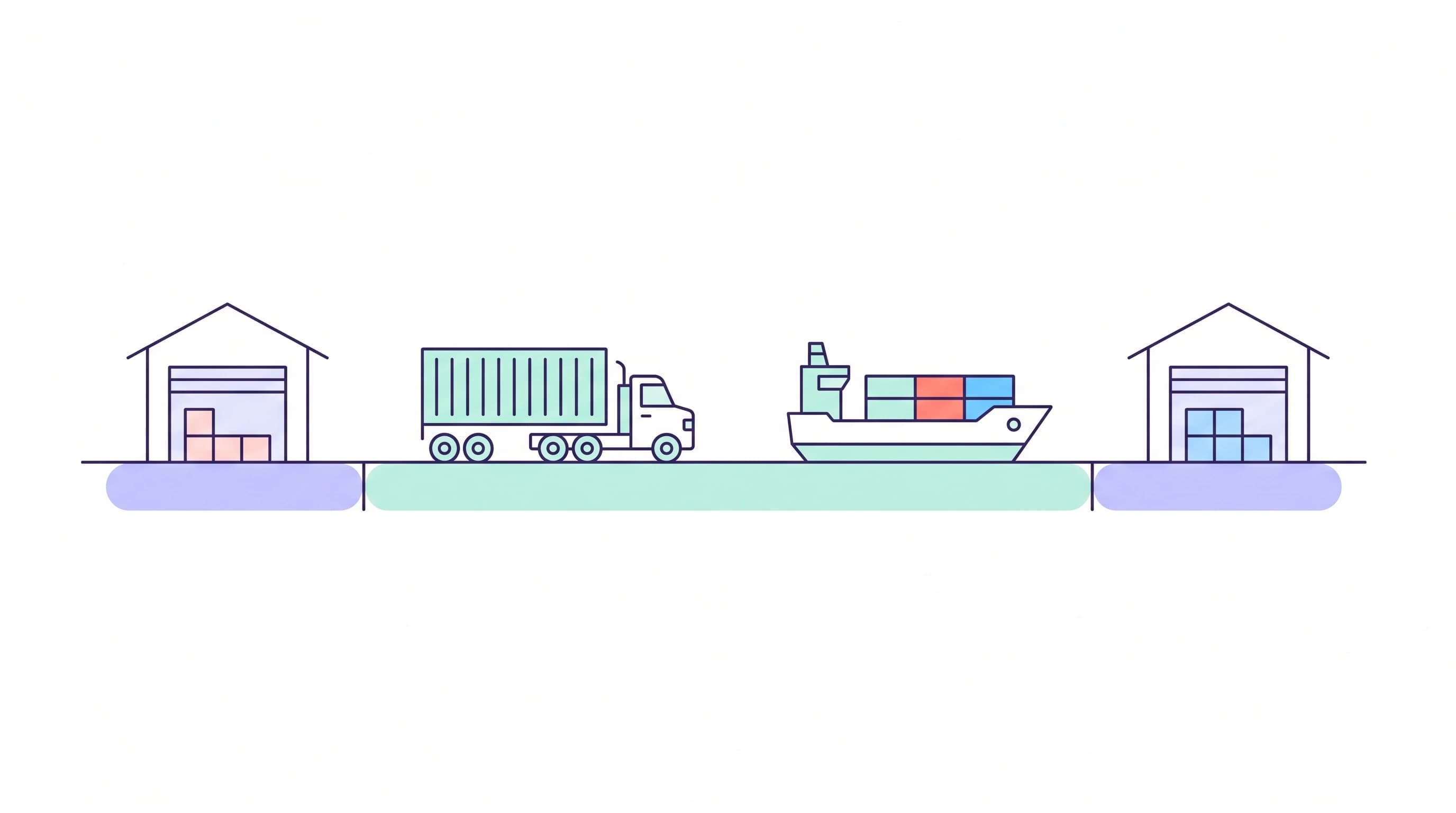
Here is the part almost nobody publishes. Cyprus's fire class, class 8, and its other damage to property class, class 9, both carve out goods falling in classes 3 to 7, by name. The class definitions are drafted so that property cover stops where a shipment starts moving. Cover for goods in transit has to come from the transit class itself.
That is a statement about how Cyprus defines its classes of insurance, not a prediction about how any particular insurer will handle a claim. Read your own wording. But it is why "we already have business insurance" is rarely the answer to "is the container covered".
Cyprus insurers write cargo under the marine and transport authorisation, which the statute names «Ασφάλιση θαλάσσης και μεταφορών» and which spans classes 1(iv), 4, 6, 7 and 12 together. That governs which insurers may write the class, not how the product is packaged, so cargo cover can sit inside a wider business programme or stand on its own.
Who buys it in Cyprus
Importers bringing containers into Limassol or Larnaca
Exporters selling on CIF or CIP terms
Distributors and wholesalers moving stock across the island
Manufacturers shipping components in and finished goods out
Online retailers holding and dispatching stock
Contractors and project owners importing plant and equipment
Cargo insurance is not compulsory in Cyprus. No law tells a cargo owner to insure a shipment. Your paperwork does the compelling instead: CIF and CIP terms oblige the seller to insure, banks want an insurance certificate before they will pay under a letter of credit, and finance and leasing agreements usually carry a covenant requiring it.
Two neighbouring products get confused with this one. Insurance on the vessel itself is hull cover, which is where yacht and marine hull insurance sits, and the carrier's own liability to its customers is a different class again. This page is about the goods.
For goods sitting in your own premises rather than moving, commercial property insurance is the right cover, and the two are designed to meet at the warehouse door.
See what your shipments would cost to insurePricing
How much does cargo insurance cost in Cyprus?
Marine cargo cover in Cyprus typically runs from 0.3% to 2% of the insured value for standard goods on standard routes. The insured value is the CIF value plus 10%, so a shipment invoiced at 50,000 euro is insured for 55,000 euro and the rate applies to that higher figure.
Cargo premium is a rate on declared value, not a flat annual fee. That is the most useful thing to understand before you compare two quotes, because a lower percentage applied to a higher declared value is not automatically the cheaper deal.
An illustration, not a quote. A shipment with a CIF value of 50,000 euro is insured for 55,000 euro. At 0.3% to 2%, that is roughly 165 to 1,100 euro for the voyage. Where you land inside that spread depends on the seven factors below, which is why we ask for them before quoting.
What moves your rate inside the band
| Factor | How it moves the rate |
|---|---|
| Commodity | Fragile, perishable or theft attractive goods rate higher than steel or gravel. Electronics, pharmaceuticals and branded consumer goods sit at the top of the band. |
| Route and transhipment | Direct lanes rate below routes with transhipment points, and war or piracy exposed waters carry their own rating on top. |
| Mode | Air, sea, road and rail carry different loss patterns, and a multimodal journey is rated across the whole chain rather than the worst leg. |
| Packing and unitisation | Containerised, properly palletised cargo rates below break bulk. Poor packing is not only expensive, it is excluded. |
| Clause set | All risks under Institute Cargo Clauses (A) costs more than the named perils of (B) or (C), because it pays out on far more. |
| Deductible | A higher excess lowers the rate. It also decides whether a small claim is worth making at all, so compare it alongside the percentage. |
| Cover structure | A single voyage rates differently from an annual programme, and an annual programme averages your easy lanes against your difficult ones. |
Most insurers apply a minimum premium per shipment, so a very small consignment will not work out at the headline percentage. Ask what that minimum is before you build an insurance cost into a per unit price.
One consequence catches almost everyone out. Cyprus values imports on CIF, and the cargo premium is part of the CIF total. Insuring the shipment raises the customs value that duty and VAT are calculated on. It is a small effect next to an uninsured total loss, but you should meet it here rather than on a customs entry.
On an annual programme the premium is usually adjusted at expiry against what you actually declared or turned over. The price then follows real trading rather than an estimate made twelve months earlier.
To quote we need the commodity and how it is packed, the value per shipment or per year, the origins and destinations, the modes, and whether you want a single voyage or an annual programme.
Get a rate on your own numbersCarrier liability
Carrier liability in Cyprus: 100 pounds a package, and what lifts it
Cyprus applies the unamended Hague Rules of 1924 through the Carriage of Goods by Sea Law, Cap. 263. The sea carrier's liability is capped at one hundred pounds per package or unit, unless the nature and value of the goods were declared before shipment and written into the bill of lading.
That figure has never been uprated. Cyprus never adopted the Visby Protocol, the SDR Protocol for sea carriage, the Hamburg Rules or the Rotterdam Rules, so the schedule to Cap. 263 still reads as it read in 1924. If you have seen limits quoted at 666.67 SDR per package or 2 SDR per kilo, those are Hague-Visby figures. Cyprus is not a Hague-Visby state, so they are not the Cyprus numbers.
We do not publish a euro equivalent of the hundred pounds. The Rules say "one hundred pounds, or the equivalent of that sum in other currency", and the 1924 gold clause makes any modern conversion contestable. The commercially important point is not the exact figure anyway. It is that the cap tracks packages, not value.
One scope limit worth stating plainly. Cap. 263 bites on carriage out of a Cyprus port. On cargo coming in, the bill of lading's paramount clause decides which regime applies, and many carriers contract on Hague-Visby. Check the bill rather than assuming the Cyprus figure covers your imports.
Here is the contrast that shows this is a deliberate gap rather than an oversight. Cyprus acceded to the CMR Convention and to its 1978 SDR Protocol on the same day, 2 July 2003, so the road cap is a live SDR figure that moves with the market. Cyprus modernised its road regime and left its sea regime in 1924.
What the carrier owes you when cargo is lost
Sea, out of Cyprus
Instrument binding on Cyprus · Carriage of Goods by Sea Law, Cap. 263, applying the Hague Rules 1924
Carrier's cap · 100 pounds per package or unit
What lifts it · Nature and value declared before shipment and entered on the bill of lading
Road
Instrument binding on Cyprus · CMR Convention and its 1978 SDR Protocol, both acceded 2 July 2003
Carrier's cap · 8.33 SDR per kilogram of gross weight short
What lifts it · A declared value or a special interest in delivery, agreed and paid for
Air
Instrument binding on Cyprus · Montreal Convention 1999, Article 22 as revised
Carrier's cap · 26 SDR per kilogram from 28 December 2024, raised from 22
What lifts it · A special declaration of interest at consignment, with a supplementary charge
Read the cap column again. Every one of them is per package or per kilogram, never per what the goods are worth. A pallet of laptops and a pallet of gravel are capped identically. That is the commercial case for cargo insurance in a single line.
The cap is not the only exposure. If the ship and its cargo are saved by a deliberate sacrifice, every cargo owner has to contribute, and an uninsured one can be asked for a cash deposit before their own undamaged goods are released. We come back to that in the claims section below.
"My forwarder covers it" is the most common misunderstanding in this market. Freight forwarders trade on standard conditions, the FIATA model rules or BIFA in the UK market, which cap their liability by weight and impose short claim notification windows. A forwarder's liability insurance indemnifies the forwarder. It is not insurance on your goods.
Insure the value, not the package countSources for the legal statements on this page
- Law 38(I)/2016, First Schedule: classes 7, 8 and 9 and the marine and transport authorisation (cylaw.org)
- Carriage of Goods by Sea Law, Cap. 263, Schedule Article IV rule 5 (cylaw.org)
- ICC Incoterms 2020 rules, including the CIF and CIP minimum cover levels
- UN Treaty Collection: CMR Convention and its 1978 SDR Protocol, Cyprus accession 2 July 2003
- ICAO Treaty Collection: revised Montreal Convention limits effective 28 December 2024
- Insurance Companies Control Service, Ministry of Finance, Republic of Cyprus
- Cyprus Customs and Excise: valuation of imported goods
Cover and exclusions
Institute Cargo Clauses (A), (B) and (C): which one you actually need
Cyprus has no marine insurance statute of its own. Cargo policies written here run on English market wordings, and the wordings that matter are the Institute Cargo Clauses. They are market documents rather than law, and the letter printed on your certificate decides what a claim pays.
Institute Cargo Clauses (A)
What it responds to · All risks of physical loss or damage, subject to the exclusions below. Theft and pilferage respond here.
Where you meet it · The default ask for anything worth insuring properly, and the minimum a CIP contract requires
Institute Cargo Clauses (B)
What it responds to · The (C) perils plus earthquake, volcanic eruption and lightning, washing overboard, entry of sea, lake or river water into the vessel, container or place of storage, and total loss of any package lost overboard or dropped while loading or unloading.
Where you meet it · A middle tier, used where all risks is hard to place or the commodity is robust
Institute Cargo Clauses (C)
What it responds to · Major casualty perils only: fire, explosion, stranding, grounding, sinking, capsizing, collision, derailment or overturning of a land conveyance, discharge of cargo at a port of distress, general average sacrifice and jettison.
Where you meet it · The contractual minimum a CIF seller has to buy. Most of the damage that actually happens is not in it

Theft, pilferage and non delivery show best why the letter matters. They respond under (A) and generally not under (C). Fraudulent collection, where goods are handed to someone posing as the booked haulier, has become a real problem across European road freight, and it needs checking against the actual wording rather than assuming.
What a cargo policy does and does not reach
Covered
- Physical loss or damage from an insured peril, warehouse to warehouse
- General average and salvage contributions
- Sue and labour costs, meaning what you spend to prevent or reduce a loss
- Loading, discharge and transhipment legs of the journey
- Storage in the ordinary course of transit
- War and strikes, once the Institute War and Strikes Clauses are attached
Not covered
- Delay, even when the delay was caused by an insured peril
- Insufficient or unsuitable packing or preparation of the goods
- Inherent vice, meaning the goods' own tendency to deteriorate or spoil
- Ordinary leakage, ordinary loss in weight or volume, and wear and tear
- Wilful misconduct of the assured
- Loss of market and other purely financial consequences
War, strikes, riots and civil commotion are excluded from all three clause sets and are bought back by attaching the Institute War Clauses (Cargo) and the Institute Strikes Clauses (Cargo). They are rated separately, and with Red Sea and Gulf routing still disrupted they have stopped being a formality. Ask what your certificate says about them before the vessel sails, not after.
Every cargo policy carries a deductible, and not one competitor page we reviewed on this topic mentions one. It is the number that decides whether a small claim is worth making, so compare it next to the rate rather than after you have chosen on price.
Cargo insurance covers damage to your goods. Damage caused by your goods once they reach the customer is a different question, and that is product liability insurance.
Who insures
Who has to insure: CIF, CIP, FOB and what your letter of credit demands
Under Incoterms 2020, CIF obliges the seller to insure at the Institute Cargo Clauses (C) minimum. CIP obliges the seller to insure at Clauses (A). Under FOB, CFR and EXW, neither party is obliged to insure at all, and the risk sits with the buyer from loading or from collection.
That CIF and CIP split is the most decision relevant fact on this page, and it appears on no other Cyprus cargo page we have read. The 2020 revision raised CIP to all risks and deliberately left CIF where it was. So if you buy on CIF terms, your supplier has bought you the narrowest cover the rules permit, and they have done nothing wrong in doing it.
CIF, cost insurance and freight
Who must insure · Seller
Minimum cover · Institute Cargo Clauses (C)
Who carries the risk in transit · Buyer, from loading on board
CIP, carriage and insurance paid to
Who must insure · Seller
Minimum cover · Institute Cargo Clauses (A)
Who carries the risk in transit · Buyer, from handover to the first carrier
CFR, cost and freight
Who must insure · Neither party
Minimum cover · None required
Who carries the risk in transit · Buyer, from loading on board
FOB, free on board
Who must insure · Neither party
Minimum cover · None required
Who carries the risk in transit · Buyer, from loading on board
EXW, ex works
Who must insure · Neither party
Minimum cover · None required
Who carries the risk in transit · Buyer, from collection at the seller's premises
A claim you will see repeated, including by people selling insurance, is that the seller insures under FOB and CFR. It does not work that way. Under both rules neither party has an insurance obligation, and the buyer carries the risk from the moment the goods are loaded. Buy FOB without arranging cover yourself and the shipment is simply uninsured.
The sum insured convention is the contract value plus ten per cent, in the currency of the contract. The uplift is there for freight, duty and the buyer's lost margin, so a CIF invoice of 50,000 euro is insured for 55,000 euro.
That 110% figure is what a letter of credit is written against. Banks typically want a policy or certificate in the beneficiary's name, for 110% of CIF value, in the currency of the credit, covering from at least the port of loading. A certificate that does not match is rejected as a discrepant document, which is a paperwork problem with a real cash cost attached.
Insurable interest sits underneath all of it. You can only insure what you stand to lose, which is why the Incoterm rather than the invoice decides who buys the policy.
A quick disambiguation, because the acronym collides. On this page CIF means cost, insurance and freight, the Incoterms rule. It does not mean Cyprus Investment Firm, which is the sense the abbreviation carries in Cyprus financial services.
Programme structure
Stock throughput: one policy for goods in transit and goods in store
Go back to the class split for a moment, because it has a practical consequence. Cyprus law puts goods at rest in the property classes and goods in transit in Class 7. Real supply chains do not respect that line. A container discharged at Limassol sits in a bonded or third party warehouse, gets deconsolidated, waits for an onward leg, then moves again. Two policies, one shipment, and an argument waiting to happen at exactly the point where the goods stopped moving.
Stock throughput is the market's answer to that seam. It is one wording running from the supplier's premises, through every leg and every storage point, to the point of sale. Marine and stock risk sit under one policy, with one limit, one deductible structure and one claims route. It is written annually or over several years, with limits and territories set to how you actually trade rather than to a single voyage.
For a Cyprus importer holding stock between arrival and sale, three things change. Nobody argues about which policy owns a loss at the warehouse door. You pay one deductible on one event instead of two. And where the wording allows it, stock can be valued at selling price rather than at cost, which is closer to what you actually lose.
Premium on this kind of programme is usually adjusted at expiry against declared turnover, rather than against inventory reported month by month. That keeps the administration light and keeps the price tied to real trading.
Extensions worth pricing
Warehouse and storage
What it adds · The storage legs at origin, destination or a third party site, tied to your turnover rather than to one voyage
Who usually needs it · Importers holding stock between arrival and sale
Project cargo and heavy lift
What it adds · Routing, lifting and site risks on oversized or one off consignments, usually with a survey
Who usually needs it · Solar plants, hotel fit outs, plant relocations, generators
Delay in start up
What it adds · The revenue consequence when a critical item is lost in transit and the project cannot open on time
Who usually needs it · Construction and energy projects working to a completion date
War and strikes
What it adds · Institute War Clauses (Cargo) and Institute Strikes Clauses (Cargo), attached and rated separately
Who usually needs it · Anything routed through the Red Sea, the Gulf or a disrupted lane
Catastrophe perils in storage
What it adds · Flood, earthquake and windstorm on stored stock, which a bare transit wording will not reach
Who usually needs it · Warehoused goods anywhere in the eastern Mediterranean
Temperature controlled cargo
What it adds · Reefer breakdown and temperature excursion cover, subject to survey and data logging
Who usually needs it · Pharmaceuticals, chilled and frozen food, chemicals
Increased value, duty and rejection
What it adds · Duty paid, the increased value on arrival, and the loss where an authority rejects a consignment
Who usually needs it · Regulated imports and the food and pharmaceutical trades
Multi layered limits and excess cover
What it adds · Capacity above a primary limit for one high value consignment or an accumulation at a warehouse
Who usually needs it · Project cargo, high value stock, seasonal peaks
Two adjacent covers come up constantly and are worth naming, because they are a different product. Warehouse legal liability and contingent cargo liability protect a business handling other people's goods, which is what a forwarder, a third party logistics operator or a bonded warehouse needs. If that is you, what you want is freight forwarder liability insurance, not a cargo policy on goods you do not own.
Where we see this most in Cyprus
Pharmaceuticals and life sciences, where the temperature record is the claim
Food, beverage and agricultural exports moving against a shelf life
Machinery, plant and project cargo for construction and energy
Retail and e-commerce stock held between arrival and dispatch
Fine art, jewellery and other high value valuables
Oil, gas and chemicals, where packaging and handling drive the loss
Buildings, plant and fixed machinery are not part of this. They belong on a commercial property insurance policy, and a stock throughput programme is designed to sit alongside one rather than replace it.
Where a lost shipment stops production or delays an opening, the revenue side of that loss is a business interruption insurance question, and delay in start up is the transit specific version of it.
Tell us where your goods stop movingA trap worth knowing
The "marine cargo" policy that only covers Cyprus
Two genuinely different products are sold under the same name in Cyprus, because both sit in Class 7. One is an international cargo policy on Institute Cargo Clauses. The other is a domestic inland transit policy for goods moving around the island, often in the insured's own closed vehicles.
Both are legitimate, and plenty of businesses need the second one. The problem is the label. A page headed "marine cargo insurance" can be selling a policy whose own terms confine cover to goods transported within Cyprus, sometimes narrowed further to the areas under the control of the Republic. Buy that when you meant the first and the container from Asia is not insured at all. Nobody has misled you. You have bought a different product wearing the same name.
Three questions to ask before you sign anything
What are the territorial limits, written out in full? "Worldwide excluding" is an answer. "Cyprus" is a different product.
Does cover run warehouse to warehouse, or only port to port? The transit clause decides where your cover starts and where it quietly stops.
Which clause set is it written on, (A), (B) or (C), and what is the deductible on each type of loss?
Domestic transit policies also carry exclusions an international cargo policy handles differently. Theft from an unattended vehicle is the common one, and it tends to be the exact loss that happens.
The same question decides vehicle imports, where marine cover typically ends at the dock and everything after that is a road and registration problem. We walk through the sequence in our guide to importing a car to Cyprus.
If what you need is cover for goods carried in your own vans and trucks around the island, that is goods in transit insurance, not an international cargo certificate.
How to buy it
Single voyage, annual open cover, or cover bought from your shipper?
There is a well argued case doing the rounds that importers should stop buying cargo cover through an intermediary and simply buy it per shipment from the shipping line at booking. Parts of it are right, and it deserves an answer rather than a wave of the hand.
Two of its points hold. An annual open cover does average premium across your whole cargo profile, so a business with one difficult lane and nine easy ones subsidises the difficult one. And under declaration and missed renewals are genuine, common causes of shipments turning out to be uninsured. That is administrative failure rather than bad policy design, and it happens more than the industry admits.
The fix for the second point is mechanical. Ask for an annual programme adjusted at expiry against declared turnover. The premium then follows what actually shipped instead of an estimate made twelve months earlier, and most of the under declaration risk goes with it.
What the case leaves out matters more. A certificate arranged by your shipper is written to the shipper's master policy, so you choose neither the clause set nor the deductible. A claim arising from the carriage is then handled under a policy arranged by the party whose carriage is in question, which is an alignment problem running in the other direction. And cover in the shipper's name does not answer a letter of credit requiring a policy in the beneficiary's name for 110% of CIF value.
Single voyage policy
Best for · The occasional shipment, or a one off consignment worth more than the rest of the year put together
Watch out for · Nobody remembers to arrange it on the ordinary shipments
Annual open cover
Best for · Regular trade on known lanes, with certificates issued against your declarations
Watch out for · The declarations actually have to be made. Ask for turnover adjustment at expiry
Stock throughput programme
Best for · Trade where goods are stored as well as moved and you want one wording end to end
Watch out for · Limits and territories need setting to how you really trade, not to a template
Shipper arranged, per shipment
Best for · Standard containerised goods on regular lanes, where no letter of credit or contract dictates the wording
Watch out for · You get the shipper's terms, the shipper's clause set and the shipper's deductible
The decision rule we give clients is simple. Single voyage for the occasional or unusually valuable consignment. Annual open cover for regular trade, provided somebody owns the declarations. Stock throughput once storage is as much of your exposure as transit. Shipper arranged cover is a reasonable default for standard boxes on standard lanes when nothing in your contracts says otherwise.
This is where an agency earns its place. DigiCare Insurance is a licensed Cyprus insurance agency and we place cargo cover across 10+ insurers, so we can put the clause set, the territorial limits, the deductible and the certificate wording side by side. An insurer's own page can only offer that insurer's wording, and a carrier can only offer its own master policy.
Compare structures on your trading patternClaims
Damaged shipment: what to do in the first 48 hours
Note the damage on the delivery receipt before you sign it, take steps to prevent further loss, serve written notice on the carrier and keep the acknowledgement, then call your insurer or agent immediately so a surveyor can be appointed before the goods are moved.

Stop the loss getting worse
Move damaged goods out of the wet, separate sound stock from damaged, and do what a prudent uninsured owner would do. What you spend doing it, known as sue and labour, is recoverable. Doing nothing is not a position the policy accepts.
Note it before you sign
Write the damage on the delivery receipt or the CMR note before signing, and photograph the container seal, the packaging and the goods where they stand. A clean signed receipt is the most expensive thing you can hand a carrier.
Serve notice on the carrier
Put the claim to the carrier in writing inside their notice period and keep the acknowledgement. Notice periods are short and they differ by mode. Missing one can cost the recovery even when the insurance pays you.
Call the insurer before the goods move
The insurer appoints a surveyor, and the survey is far more useful while the cargo is still as it was found. Do not repack, dispose of or repair anything until you have been told you can.
Assemble the file
Invoice, packing list, bill of lading or air waybill, the insurance certificate, photographs, the survey report, all carrier correspondence and the notice with its acknowledgement. A complete file is what makes a claim quick.
Serve that notice on the carrier even when you are certain the insurance will pay. Once your insurer settles it steps into your shoes and recovers from the carrier, and a notice period you let expire prejudices that recovery. Some policies make preserving those rights a condition of cover.
One more, because it is the most expensive surprise on this topic and almost nobody warns you about it. Bills of lading incorporate the York-Antwerp Rules. If the ship and its cargo are saved by a deliberate sacrifice or by extraordinary expenditure, general average is declared and every cargo owner contributes in proportion to the value saved, even when their own goods are untouched. Before your container is released you will be asked for a general average bond, and if you are uninsured, for a cash deposit against your share. An insured cargo owner's policy responds and the insurer provides the guarantee. An uninsured one finds the money or waits.
Get covered
Get a marine cargo quote in Cyprus
Send us a shipment profile and we will come back with options from across 10+ insurers, with the clause set, the territorial limits and the deductible set out so you can compare like with like.
Tell us what you ship
Commodity, packing, values, routes and modes. A bill of lading or a packing list from a recent shipment is usually enough to start.
We compare the market
We put your risk to the Cyprus insurers writing cargo under the marine and transport authorisation, then set the quotes out side by side.
Cover and certificate
You choose the structure, we bind the cover and issue the certificate in the wording your bank or your buyer requires.
The short version of what we need: commodity and how it is packed, value per shipment or per year, origins and destinations, modes, whether you want a single voyage or an annual programme, and whether a certificate is needed for a letter of credit.
If you are working to a letter of credit, tell us the deadline and the required wording at the start. Certificates for a straightforward risk normally go out the same working day once cover is bound, and a discrepant certificate is a problem that costs real money to fix at the bank.
Marine cargo quote request
No obligation. We come back with options, not a single quote.
DigiCare Insurance is a licensed Cyprus insurance agency, ICCS licence 2451, and we have been placing cover in Cyprus for over 15 years. We compare 10+ insurers, we are rated 5.0 on Google, and we work in English, Greek and Russian.
Cargo cover is one part of a trading business's programme. The rest usually sits alongside business insurance in Cyprus, commercial property insurance and business interruption insurance, and we can quote them together.
Costas Matheou — Licensed insurance agent, DigiCare Insurance, Paphos, Cyprus
Last reviewed: 28 July 2026
Licensed Cyprus insurance agency, ICCS licence 2451
We review this page when Cyprus cargo rates move, when the Institute Cargo Clauses or the Incoterms rules are revised, and when a carrier liability limit changes. The Montreal Convention limits are next due for review around December 2029.
FAQ
Marine cargo insurance in Cyprus: common questions
Insure the next shipment before it sails
Send us the commodity, the value and the route. We compare cargo cover across 10+ Cyprus insurers and issue the certificate in the wording your bank asks for.
Licensed Cyprus insurance agency, ICCS licence 2451 · 10+ insurers compared · English, Greek and Russian